Kyle Kennedy Dies at 42 as Christina Applegate Reveals MS Misdiagnosis: What We Know
Two deeply personal stories drew national attention on October 20, 2026, as the death of Kyle Francis Kennedy, a granddaughter of Robert F. Kennedy, was reported and actress Christina Applegate revealed that doctors had reversed her previous multiple sclerosis diagnosis.
Kennedy, an educator and disability rights advocate, died on September 21 at age 42. Her death was confirmed through public records and a family obituary, although the cause had not been publicly announced when major news organizations reported it in October.
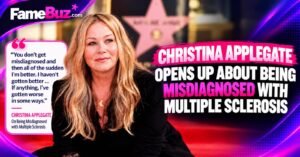
Meanwhile, Applegate, the Emmy-winning actress known for Married… with Children, Dead to Me and Samantha Who?, shared an unexpected development in a health journey she has discussed publicly for years. After being diagnosed with multiple sclerosis in 2021, she said her doctors now believe that diagnosis was incorrect.
The news does not mean Applegate’s symptoms have disappeared. Instead, she has described facing renewed uncertainty as specialists work to understand what has been affecting her health.
Although these are separate stories involving different families and circumstances, both developments have generated attention because they concern people whose public lives have intersected with important conversations about disability, health and resilience.
Here is a closer look at the confirmed facts, the background behind each story and the questions that remain unanswered.
Kyle Francis Kennedy, Granddaughter of Robert F. Kennedy, Dies at 42
Kyle Francis Kennedy died on September 21, 2026, at her home in Westwood, Massachusetts. She was 42.
Her death was reported publicly by major news organizations on October 20, following confirmation from local records and an obituary published by Burke Funeral Homes.
Kennedy was the granddaughter of former U.S. Attorney General and senator Robert F. Kennedy and his wife, Ethel Kennedy. She was the daughter of Michael Kennedy and Victoria Gifford Kennedy.
Although her family name connected her to one of America’s best-known political families, Kyle Kennedy built a professional and personal identity centered on education, community service and advocacy.
She worked as a teacher, pursued graduate studies in education and later became involved in efforts to improve opportunities for children.
In the years following a serious spinal cord injury, she also supported disability rights and greater recognition of the barriers faced by people living with physical disabilities.
Her cause of death has not been publicly established.
That distinction is important because Kennedy’s medical history has been discussed in reports about her life. The existence of a previous injury does not establish what caused her death, and no responsible account should suggest otherwise without reliable confirmation.
Her passing has brought renewed attention to the work she pursued and the contributions she made outside the political spotlight.
Who Was Kyle Kennedy?
Kyle Kennedy was born on July 6, 1984, in Washington, D.C., and spent much of her childhood in Massachusetts.
She grew up within the extended Kennedy family, whose members have been involved in politics, public service, journalism and advocacy for generations.
Her father, Michael Kennedy, was a son of Robert and Ethel Kennedy. He died in a skiing accident in Colorado in December 1997, when Kyle was still a child.
Despite the public recognition associated with her family, Kyle followed a path that emphasized teaching and educational development.
She studied history at Georgetown University and later earned graduate qualifications at Pace University and Harvard University’s Graduate School of Education.
Her academic background reflected an interest in how schools function and how educational systems can better support students.
After college, she participated in Teach For America and worked in New York City public schools.
Teaching provided a direct connection to the challenges facing children and educators, particularly in communities where access to educational resources can be uneven.
Her subsequent work included education reform and efforts involving technology intended to support learning and improve curricula.
These professional activities are an important part of her story. Public attention may initially focus on her Kennedy family connections, but her career was rooted in work that extended beyond that family history.
Her Commitment to Early Childhood Education
Kennedy’s educational interests included early learning and the opportunities available to children from disadvantaged backgrounds.
Early childhood education can shape a student’s later academic experience, making it a significant focus for teachers, researchers and education advocates.
Kennedy’s work reflected an interest in helping students access stronger learning environments and in finding practical ways to improve educational systems.
Her academic training and classroom experience gave her perspectives from both educational practice and policy.
While her family’s public profile brought attention to her death, her professional life deserves recognition on its own terms.
She was not simply a member of a prominent political family. She was also an educator who devoted substantial time to questions about children’s development and access to learning.
Kyle Kennedy’s Athletic Life and 2020 Spinal Cord Injury
Before her injury, Kennedy was an enthusiastic athlete and long-distance runner.
She completed the 2019 Boston Marathon, an achievement that reflected her commitment to endurance sports.
Her family’s obituary noted that she completed the race faster than her father had.
The marathon became one of the notable athletic accomplishments mentioned in remembrances of her life.
In 2020, however, Kennedy suffered a serious spinal cord injury that resulted in long-term paralysis and other medical challenges.
The injury significantly changed the circumstances of her daily life.
Rather than treating this period solely as a medical story, accounts of Kennedy’s later years also highlight her continued involvement in public advocacy.
She became interested in how health care systems treat people with disabilities and the difficulties they can encounter when seeking appropriate services.
Her advocacy included testimony before Massachusetts lawmakers concerning discrimination in health care affecting people with disabilities.
This work placed her personal experience within a broader discussion about access, dignity and equal treatment.
Why Her Disability Advocacy Matters
People with disabilities may encounter barriers involving transportation, accessibility, medical care and participation in everyday activities.
Public discussions about disability rights often focus on how institutions can remove unnecessary obstacles and ensure that people receive appropriate treatment.
Kennedy’s decision to participate in legislative discussions reflected a willingness to contribute to those conversations.
Her experiences gave her a personal understanding of the importance of accessible services.
At the same time, her life should not be reduced to her injury.
She had an established educational career, athletic interests, family relationships and a record of advocacy that existed alongside the challenges she faced.
Recognizing those different aspects provides a fuller and more respectful account of her life.
It also avoids the misleading assumption that disability alone defines someone’s achievements or identity.
The Kennedy Family’s History of Public Loss
Kyle Kennedy’s death has also renewed interest in the history of the Kennedy family.
Her grandfather, Robert F. Kennedy, was assassinated in Los Angeles in June 1968 while campaigning for the Democratic presidential nomination.
He had previously served as U.S. attorney general during the administration of his brother, President John F. Kennedy.
President Kennedy was assassinated in Dallas in November 1963.
Decades later, Kyle’s father, Michael Kennedy, died in a skiing accident on December 31, 1997.
These events are part of the family’s well-documented history, but they should not overshadow Kyle Kennedy’s individual accomplishments.
Each loss involved different circumstances and deserves to be understood separately.
For readers learning about Kyle for the first time, her educational work and disability advocacy provide important context beyond her famous surname.
The fact that she was related to prominent political figures explains the public interest in her death, but it does not fully explain the life she lived.
Her professional achievements, personal relationships and community involvement are equally relevant.
What Is Known About Kyle Kennedy’s Family and Funeral?
Kennedy’s family obituary identifies her as a mother and describes her commitment to her children.
She had married Liam Kerr in 2012, and later public accounts identified him as her former husband.
Her survivors include family members across the extended Kennedy family.
The family held a private funeral service.
There is no need to speculate about private family conversations, arrangements or personal reactions that have not been publicly shared.
In reporting on a death, particularly when children and other relatives are affected, respecting the boundaries between public information and private grief is essential.
The available reporting establishes Kennedy’s death, her age, the date and location, and significant details of her life.
It does not establish a cause of death.
Unless an official statement or reliable new reporting provides that information, it remains an unanswered question.
Christina Applegate Reveals She Was Misdiagnosed With Multiple Sclerosis
In a separate major development, Christina Applegate revealed on the October 20, 2026, episode of her MeSsy podcast that her doctors had concluded she did not have multiple sclerosis.
Applegate first publicly disclosed an MS diagnosis in 2021.
Over the following years, she became a prominent voice discussing the physical and emotional challenges she experienced.
She spoke about difficulties with mobility, pain and the changes her symptoms brought to her personal and professional life.
Her public discussions helped audiences understand that chronic health problems can affect nearly every aspect of daily living.
Now, the actress says the medical explanation she had relied upon for years has changed.
According to her account, doctors reassessed her condition and determined that her earlier diagnosis was incorrect.
The announcement surprised many listeners who had followed her health journey.
However, Applegate made clear that receiving this news was not the same as recovering from the symptoms that had affected her for years.
She continues to experience substantial physical difficulties.
The new development has therefore created a different challenge: understanding the cause of those symptoms without the diagnosis she previously believed explained them.
Why the MS Misdiagnosis Has Been So Difficult for Applegate
For someone experiencing persistent symptoms, receiving a diagnosis can provide an explanation for otherwise confusing medical problems.
It may also help guide treatment decisions, specialist appointments and expectations about the future.
Applegate had spent years understanding her experiences through the diagnosis of multiple sclerosis.
She also became involved in conversations with other people living with MS.
Learning that the diagnosis was incorrect did not erase the symptoms she continued to experience.
Instead, it raised new questions about what had been happening and what medical investigations might be necessary.
On MeSsy, Applegate discussed the uncertainty surrounding the situation and the difficulty of returning to the search for answers.
She described continuing problems with mobility and other symptoms that have affected her everyday activities.
Her comments emphasized that a revised diagnosis should not automatically be interpreted as good news for someone who remains unwell.
The change may be medically significant, but it does not immediately resolve the practical difficulties that person faces.
This distinction is central to understanding Applegate’s announcement.
Her doctors’ revised assessment concerns the explanation for her symptoms, not whether those symptoms are real.
What Led Doctors to Reconsider Christina Applegate’s Diagnosis?
During her podcast discussion, Applegate described how her medical team had begun questioning the original diagnosis.
According to CBS News, she said that a doctor had previously decided to stop an infusion treatment and observe how certain immune cells responded.
The results contributed to further questions about whether her condition had been correctly identified.
Applegate said that the review eventually led her doctor to tell her that she did not have MS.
The actress also discussed undergoing medical testing during the earlier stages of her health journey.
Those details provide some insight into the reassessment, but they do not establish a new diagnosis.
A complete medical evaluation requires access to clinical records, examination findings and specialist judgment.
Outside observers cannot determine the cause of her symptoms from podcast comments or news reports.
For that reason, it would be inappropriate to suggest that Applegate has a particular alternative neurological condition.
The responsible conclusion is narrower: her doctor has reversed the earlier MS diagnosis, and the underlying explanation remains under investigation.
What Is Multiple Sclerosis?
Multiple sclerosis is a chronic condition involving the central nervous system.
It occurs when immune-system activity damages protective material surrounding nerve fibers, potentially disrupting communication between the brain, spinal cord and other parts of the body.
Symptoms can vary substantially between individuals.
They may include fatigue, numbness, weakness, changes in balance, vision problems and difficulty walking.
Not every person experiences the same symptoms, and the course of the condition can differ widely.
Diagnosis can also be complicated because symptoms and imaging findings may overlap with those of other medical conditions.
There is no single test that independently confirms every case of MS.
Doctors generally consider medical history, neurological examinations, imaging, laboratory findings and other information before reaching a conclusion.
This complexity helps explain why specialist review can sometimes lead to changes in a patient’s diagnosis.
However, general information about MS should not be used to speculate about Applegate’s individual medical condition.
Only her treating medical professionals can assess the evidence relevant to her care.
Christina Applegate’s Health Journey Since 2021
Applegate publicly announced her multiple sclerosis diagnosis in 2021, bringing attention to a personal health challenge that would influence her career and public appearances.
She subsequently spoke about how her physical condition affected her work and mobility.
The actress had already built a long television and film career before the diagnosis.
She became widely recognized for portraying Kelly Bundy on Married… with Children and later starred in productions including Samantha Who?, Anchorman and Netflix’s Dead to Me.
Her performance in Dead to Me received critical recognition, and the series became an important part of the later phase of her acting career.
As she dealt with significant symptoms, Applegate discussed the adjustments required to continue working.
Her willingness to speak publicly about those challenges helped make chronic illness and disability more visible within entertainment coverage.
She also addressed the emotional consequences of changes to her health and independence.
Those experiences remain part of her history regardless of the new information about her diagnosis.
The difficulties she described were not dependent on a particular medical label.
Her latest announcement changes the understanding of what doctors believe caused her symptoms, but it does not rewrite the experiences she has publicly documented.
The Role of the MeSsy Podcast
Applegate co-hosts MeSsy with actress Jamie-Lynn Sigler, who has also spoken publicly about living with multiple sclerosis.
The podcast has provided a setting for conversations about health, relationships, personal challenges and the realities of living with difficult symptoms.
Because both hosts have discussed MS, Applegate’s new announcement carries particular significance for the program.
The podcast was one of the places where listeners could hear her describe experiences in her own words rather than through brief entertainment headlines.
Her October 20 update continued that approach.
Rather than presenting the reversal of her diagnosis as a simple positive outcome, she discussed the uncertainty and emotional complexity of the news.
That context matters.
A headline stating only that Applegate does not have MS could leave readers with the mistaken impression that her health problems have ended.
Her actual account is more complicated.
She has been told that the original diagnosis was incorrect, but she continues to seek answers about persistent symptoms.
The podcast also illustrates how public figures can communicate health information directly while retaining the right to keep other medical details private.
Applegate has chosen to share certain experiences publicly.
That choice does not make every aspect of her medical history available for speculation.
What Happens Next in Christina Applegate’s Health Investigation?
According to her October 20 podcast discussion, Applegate expects her doctors to continue investigating the symptoms she has experienced since 2021.
CBS News reported that she anticipated further medical work beginning the following week.
The purpose of that process is to better understand the cause of her symptoms and determine what medical care may be appropriate.
No confirmed replacement diagnosis has been publicly announced.
Until Applegate or her medical team provides reliable additional information, any claim identifying a new condition would be speculation.
There is also no verified basis for predicting how quickly the investigation will produce answers.
Medical evaluations can involve several specialists and multiple stages of testing, depending on the circumstances.
The results may clarify a diagnosis, lead to additional questions or require continued observation.
For now, the most accurate description is that Applegate remains symptomatic and is pursuing further medical evaluation.
Her announcement also offers a reminder that health developments involving celebrities should be reported with care.
The fact that someone is well known does not make a complicated medical process simple, nor does it justify conclusions that the available evidence cannot support.
Why These Two Stories Have Drawn National Attention
The deaths of members of prominent families and significant health announcements from well-known entertainers often receive extensive coverage.
In Kyle Kennedy’s case, public interest reflects both her family background and her work as an educator and disability advocate.
Her life included achievements and contributions that deserve attention beyond the Kennedy family’s political history.
In Applegate’s case, interest reflects her decades-long entertainment career and the openness with which she has discussed her health.
Many people have followed her public appearances and podcast conversations since 2021.
The two stories are not medically connected.
There is no evidence suggesting any relationship between Kennedy’s death and Applegate’s diagnosis update.
They