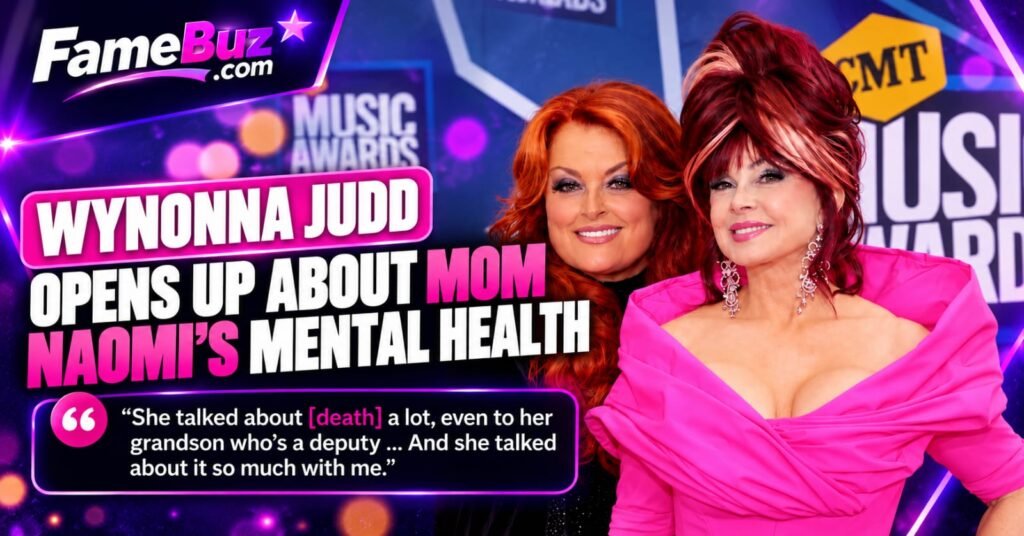
Wynonna Judd Opens Up About Mom Naomi Judd’s Mental Health and Her Journey Through Grief
Country music star Wynonna Judd is reflecting on her late mother, Naomi Judd, and the difficult conversations they shared before Naomi’s death in April 2022. In a deeply personal interview on All There Is With Anderson Cooper, Wynonna discussed her mother’s mental health struggles, the emotional challenges their family experienced, and the lasting impact of losing someone she loved.
Naomi Judd died by suicide on April 30, 2022, at age 76. Her death shocked fans and the country music community, coming just one day before The Judds were scheduled to be inducted into the Country Music Hall of Fame.
More than four years later, Wynonna continues to reflect on her mother’s life and the complicated emotions surrounding her loss. Her recent comments offer a personal perspective on family relationships, mental health, and the ongoing process of grief.
Wynonna Judd Reflects on Her Mother’s Mental Health
During her conversation with Anderson Cooper, Wynonna recalled that her mother had spoken about death on multiple occasions before her passing.
According to the interview, Naomi discussed the subject with family members, including Wynonna. The singer remembered feeling concerned about her mother and described times when Naomi reached out during emotionally difficult moments.
Wynonna recalled trying to support her mother by visiting her, spending time with her, and offering reassurance. These memories illustrate the emotional challenges that can arise when someone close to you is experiencing serious mental health difficulties.
Her account also reflects the uncertainty family members may feel when trying to help a loved one who is struggling.
Wynonna’s comments are personal recollections, not a complete medical history of Naomi’s condition. They do not establish that her family could have predicted or prevented her death.
Mental health crises are complex, and responsibility for a person’s suicide should not be placed on relatives who were trying to provide support.
By discussing these memories publicly, Wynonna has helped bring attention to the emotional challenges families can experience when a loved one is struggling.
Remembering Naomi Judd’s Death in 2022
Naomi Judd died on April 30, 2022, at age 76. Her family subsequently confirmed that she had experienced mental illness and that her death was a suicide.
The timing was especially difficult for her family because The Judds were scheduled to be inducted into the Country Music Hall of Fame on May 1, 2022.
The ceremony proceeded, with Wynonna and her sister, actress Ashley Judd, attending to honor their mother and the duo’s musical achievements.
The moment brought together celebration and profound loss. The induction recognized the work Naomi and Wynonna had created together over decades, while the family was still coping with Naomi’s death.
For fans, the ceremony became an opportunity to remember Naomi’s contributions to country music and express sympathy for her daughters.
For Wynonna, the occasion marked a significant moment in the relationship between her family history and her professional identity.
The Judds’ music had always been closely connected to their relationship as mother and daughter. After Naomi’s death, that shared history continued to influence Wynonna’s public reflections and musical career.
The Judds’ Lasting Influence on Country Music
Naomi and Wynonna Judd became one of country music’s most recognizable duos during the 1980s. Performing as The Judds, they built a successful career through close vocal harmonies, traditional country influences, and emotionally direct storytelling.
Their music reached a wide audience and helped reinforce the popularity of traditional country sounds during a period of change in the genre.
Songs such as Mama He’s Crazy, Why Not Me, and Grandpa (Tell Me ’Bout the Good Old Days) became important parts of their musical legacy.
Their success earned them multiple industry honors, including five Grammy Awards during their career together.
The duo’s achievements extended beyond individual hit songs. Their performances demonstrated how a family partnership could become a defining creative force in country music.
Naomi contributed to the group’s distinctive sound and public identity, while Wynonna’s powerful vocals became one of its most recognizable features.
Although Wynonna later established a successful solo career, her work with Naomi remained central to her musical story.
Their songs continue to connect with listeners who associate the music with family relationships, personal memories, and important moments in their lives.
The Country Music Hall of Fame induction in 2022 formally recognized the duo’s influence and enduring contribution to the genre.
A Mother-Daughter Relationship Beyond the Spotlight
Wynonna’s reflections also highlight the complexity of her relationship with Naomi.
Their professional success was built around their connection as mother and daughter, but working together did not mean their relationship was always simple.
Like many families, they experienced a combination of affection, difficult moments, shared experiences, and personal challenges.
Their public careers meant that audiences often saw them through performances and interviews. However, their private relationship included experiences that could not be fully understood from the stage.
Grief can make these memories especially complicated. Losing a parent may bring sadness and longing, while also prompting a person to revisit difficult conversations and unresolved feelings.
Wynonna’s comments suggest that remembering her mother involves acknowledging both the love they shared and the struggles that affected their family.
Naomi’s mental health challenges were one part of her life, not the entirety of her identity or legacy.
Her musical achievements, her relationship with her daughters, and the memories shared by fans remain important parts of her story.
Wynonna’s willingness to speak about these experiences offers a more personal understanding of the family behind one of country music’s best-known duos.
Ashley Judd and the Family’s Response
Wynonna’s sister, Ashley Judd, has also spoken publicly about their mother’s death and the role mental illness played in the family’s experience.
Following Naomi’s passing, the sisters acknowledged their loss while encouraging greater understanding of mental health challenges.
Their public comments have helped keep the focus on the seriousness of mental illness rather than speculation about private family matters.
Wynonna’s interview includes recollections of family members who were aware of Naomi’s expressions of distress. However, her account should not be treated as a complete explanation of Ashley’s experiences or every conversation that occurred within the family.
Each person processes grief differently, and family members may remember the same period from different perspectives.
Respecting those differences is important, particularly when discussing suicide and sensitive medical information.
The family’s decision to speak publicly provides an opportunity for discussion, but it does not remove the need to respect their privacy.
Wynonna Judd’s Music and the Process of Grief
Wynonna has continued to perform and record music following her mother’s death. Her career has provided an outlet for personal expression while allowing her to maintain a connection with audiences who have followed her work for decades.
Her 2026 album, The Hard Truth, has been discussed in interviews as a personal project shaped by difficult life experiences.
In recent conversations, Wynonna has connected songwriting with the process of confronting painful emotions and moving forward.
Music has long been central to her relationship with Naomi. As The Judds, they performed songs that explored love, family, memory, and resilience.
As a solo artist, Wynonna has continued to develop her own musical identity while carrying the influence of that shared history.
Her recent reflections demonstrate that grief does not necessarily disappear with time. Instead, people may gradually develop new ways of understanding their loss and incorporating it into their lives.
Not every song should be interpreted as a direct account of a specific event. Nevertheless, Wynonna’s willingness to discuss her experiences offers context for listeners seeking to understand the personal themes behind her work.
Why the Interview Matters
All There Is With Anderson Cooper explores grief, loss, and the ways people continue living after profound personal experiences.
Wynonna’s appearance fits that broader conversation by examining the emotional impact of losing a parent and remembering difficult moments from their relationship.
Her comments have attracted attention because they offer insight into experiences that were largely private while Naomi was alive.
However, the interview should not be treated as a complete explanation of Naomi’s mental health or the circumstances surrounding her death.
Its significance lies in Wynonna’s personal perspective and her willingness to discuss a painful subject with honesty.
The conversation may also resonate with people who have tried to support a loved one experiencing mental health difficulties.
Such situations can leave family members feeling worried, confused, or uncertain about what to do. Professional support can be important for both people experiencing distress and those trying to help them.
Wynonna’s story reinforces the importance of approaching these experiences with compassion rather than blame.
Mental Health Awareness and Support
Naomi Judd’s death brought renewed public attention to mental health and the challenges that can affect people regardless of their career, success, or public image.
Wynonna’s reflections continue that conversation by describing the perspective of a family member who witnessed her mother’s struggles.
Statements about wanting to die, feelings of hopelessness, or expressions of unbearable emotional pain should be taken seriously. However, no single sign can predict every outcome, and mental health crises vary from person to person.
Family and friends can offer valuable emotional support, but they do not have to manage a crisis alone. Qualified mental health professionals and crisis services can provide additional assistance.
It is also important not to blame relatives for a loved one’s death. Suicide is complex, and an individual’s circumstances cannot be reduced to one conversation or one family relationship.
In the United States, anyone experiencing suicidal thoughts or emotional distress can call or text 988 to reach the Suicide & Crisis Lifeline. People concerned about someone else can also contact the service for guidance.
What Comes Next for Wynonna Judd?
Wynonna’s latest reflections do not announce a new development concerning Naomi’s death. Instead, they add to the singer’s ongoing discussion of grief, family, and the experiences that continue to shape her life.
Her music remains an important way for her to connect with audiences while exploring personal themes.
For longtime fans of The Judds, her comments offer another perspective on the mother-daughter partnership behind many beloved country songs.
For others, the interview may provide a reminder that grief is often complicated and deeply personal.
Wynonna’s memories recognize the difficulty of her mother’s mental health struggles without allowing those struggles to erase Naomi’s achievements or the relationship they shared.
Ultimately, Wynonna Judd’s reflections are about more than the circumstances of her mother’s death. They are about remembering a loved one, confronting painful experiences, and continuing forward while carrying the past.
Naomi Judd’s musical legacy remains part of country music history, and the songs she created with Wynonna continue to connect with listeners. Through her interviews and music, Wynonna is finding ways to speak about that legacy while acknowledging the lasting impact of her loss.
If you or someone you know is experiencing suicidal thoughts or emotional distress in the United States, call or text 988 for free, confidential support.